
Irrigation Installation: Top 10 Expert Services Reviewed 2024
Why Irrigation Installation is Essential for Your Lawn
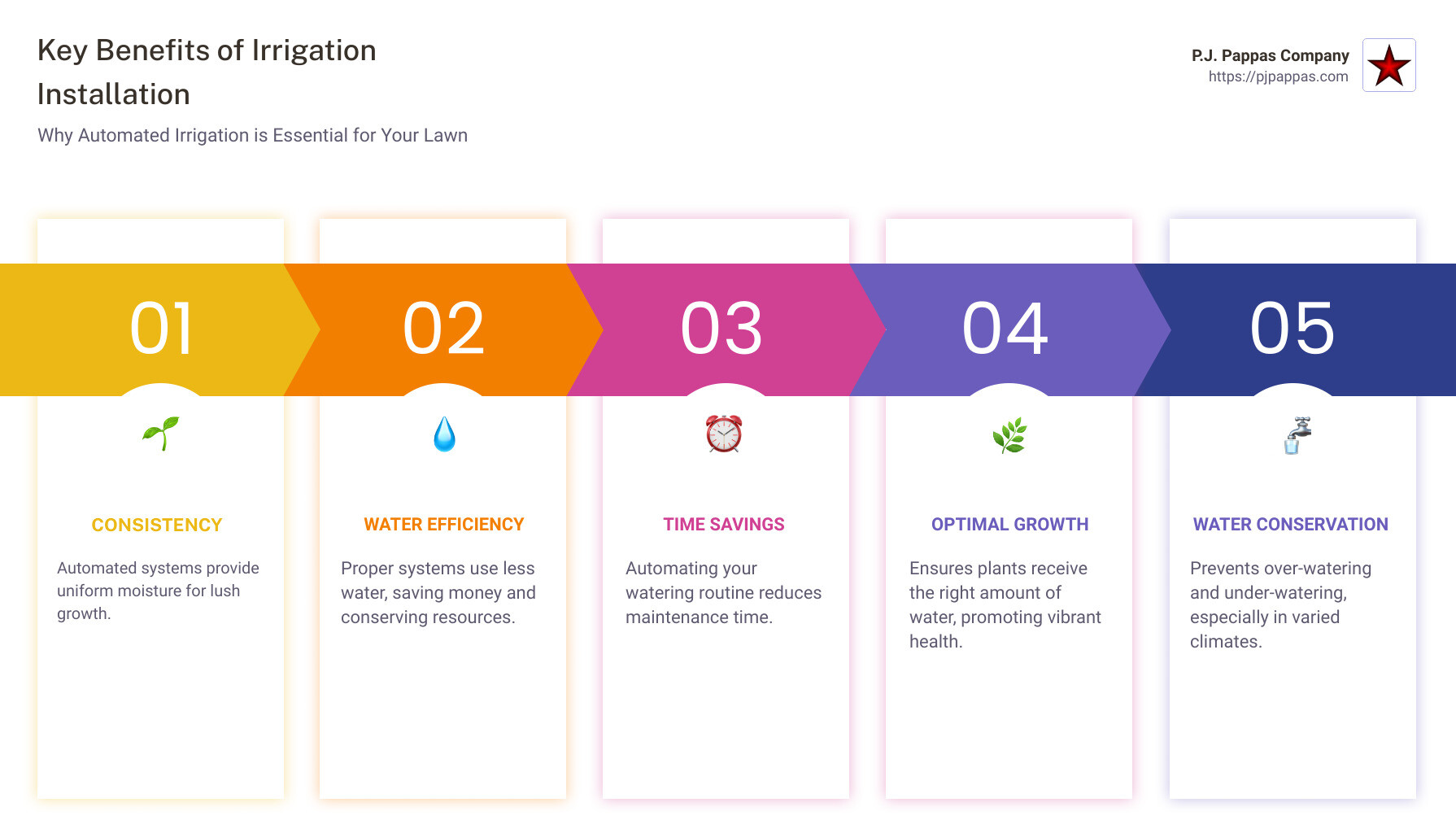
Irrigation installation is key to maintaining an attractive and healthful lawn, whether you have a cozy backyard or a vast commercial property. Here are the quick essentials you need to know:
- Consistency: Automated water systems provide uniform moisture, crucial for lush growth.
- Water Efficiency: Proper systems use less water, saving you money and conserving resources.
- Time Savings: Automating your watering routine means you spend less time on maintenance.
Irrigation systems ensure that your plants receive the right amount of water at the right time, promoting vibrant health and reducing the risks of over-watering or under-watering. Automated systems offer consistent soil moisture, leading to optimal growth and flowering while conserving water. This is especially important in varied climates and soils, where manual watering can be inefficient and labor-intensive.
I’m Peter Pappas, and I have over 37 years of experience in the field of irrigation installation. As the owner of P.J. Pappas Company, my goal is to provide efficient and reliable lawn care solutions tailored to your needs.
Understanding Irrigation Installation
Types of Irrigation Systems
When it comes to irrigation installation, there are three main types to consider: in-ground, drip, and soaker systems.
- In-ground Systems: These are the most common and involve underground pipes that distribute water to sprinkler heads. They are ideal for lawns and larger garden areas. In-ground systems are less intrusive and more attractive since they are hidden from view. They also offer precise water distribution.
- Drip Systems: Drip irrigation delivers water directly to the base of plants through a network of tubes and emitters. This method is efficient for gardens with plants that have different watering needs. Drip systems reduce water waste by targeting the root zone and minimizing evaporation.
- Soaker Systems: Soaker hoses are porous and allow water to seep out slowly along their length. These are best for garden beds and areas with closely spaced plants. Soaker systems are simple to install and maintain, offering a cost-effective solution for consistent watering.
Key Components of an Irrigation System
An efficient irrigation system consists of several key components that work together to ensure your garden gets the right amount of water.
- Pipes and Tubing: These are the main arteries of your irrigation system, carrying water from the source to the emitters. They can be made from PVC, polyethylene, or specialized garden hoses.
- Sprinklers and Drip Emitters: Sprinklers distribute water over a wide area, while drip emitters deliver water directly to the plant’s root zone. The choice depends on your garden’s layout and plant types.
- Controllers: Also known as timers, controllers automate the watering schedule. Modern controllers can be programmed to water at specific times and can even be controlled remotely via smartphone apps.
- Sensors: These include moisture sensors, rain sensors, and flow sensors. Moisture sensors measure soil moisture levels and adjust watering schedules accordingly. Rain sensors prevent the system from running during rain, conserving water. Flow sensors detect leaks and irregularities in water flow, helping to prevent water waste.
By understanding these components and how they work together, you can create a tailored irrigation system that meets your garden’s specific needs.

Next, we’ll dive into the planning phase of your irrigation installation, including site assessment, choosing the right water source, and designing your system layout.
Planning Your Irrigation Installation
Assessing Your Site for Irrigation
Proper site assessment is crucial for a successful irrigation installation. Start by understanding your soil type. Clay soil absorbs and releases water slowly, making it prone to runoff. Sandy soil drains quickly and needs more frequent watering. Loam soil is ideal, as it balances absorption and drainage.
Next, consider your plant needs. Group plants with similar water requirements together. This ensures efficient watering and prevents over- or under-watering.
Landscape layout is also important. Map out your garden, noting features like flower beds, trees, and slopes. Slopes affect water pressure and distribution, so plan accordingly.
Choosing the Right Water Source
Your water source is the backbone of your irrigation system. Here are your options:
- Municipal Water: Reliable and consistent, but check local regulations for backflow prevention requirements.
- Well Water: Offers independence from municipal systems but requires a pump. Ensure the well can meet your irrigation needs.
- Rain Collection: Eco-friendly and cost-effective. Use rain barrels or a more sophisticated rainwater harvesting system.
System Design
Designing your irrigation system involves mapping out the layout and planning for zones. Use graph paper to sketch your garden to scale. Mark the location of your water meter and all permanent features.
Watering zones are essential for efficient irrigation. Each zone should have plants with similar water needs and be controlled by its own valve. This allows for targeted watering and better water management.
When planning your system, aim for 100% coverage by overlapping sprinkler patterns. This ensures no dry spots. Also, consider the type of sprinkler heads you need. Pop-up heads are great for lawns, while taller shrub sprinklers work well for flower beds.
By carefully assessing your site and choosing the right water source, you can design an efficient and effective irrigation system tailored to your garden’s needs.
The Irrigation Installation Process
Step-by-Step Installation Guide
Connecting to Water Source
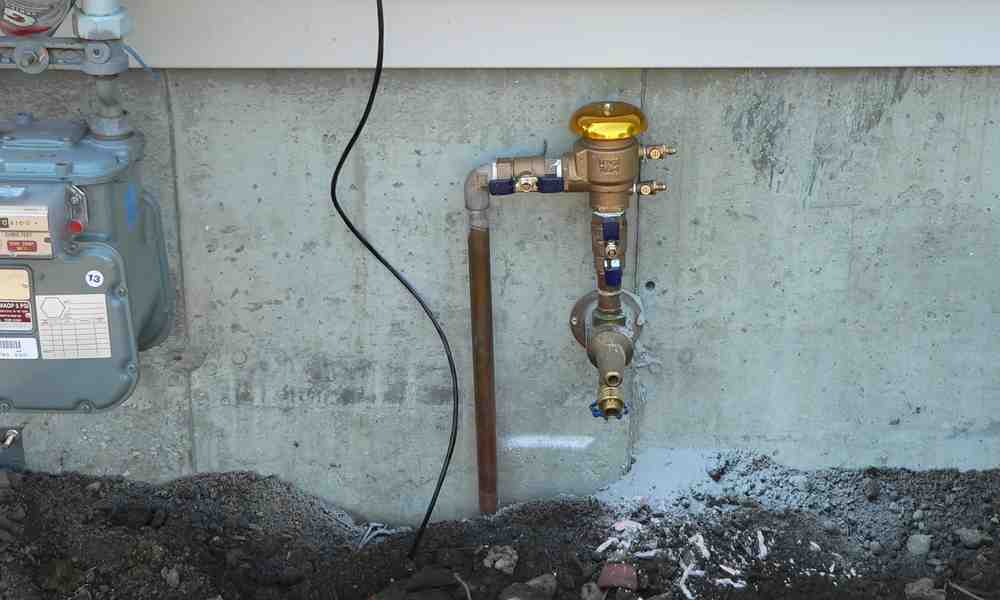
Start by identifying your main water source. This could be an outdoor tap, your home’s water system, or a rainwater collection system. Install a backflow preventer to keep contaminated water from entering your clean water supply. Use thread seal tape on threaded joints to ensure a leak-free connection.
Installing the Shut-Off Valve
Place a shut-off valve right after the backflow preventer. This allows you to control the irrigation system separately from the house’s main water supply. Make sure the valve is easily accessible for quick operation.
Laying the Main Line
Use a trenching tool or shovel to dig a trench for the main line. Aim for a depth of 6 to 12 inches to protect the pipe from damage and freezing. Run the main line from the water source to the areas you plan to irrigate.
Planning and Installing Lateral Lines
Branch out lateral lines from the main line using T-connectors. Carefully map out these lines to ensure efficient water distribution. Cut the lateral lines to the required lengths and connect them using fittings. Ensure each connection is tight to prevent leaks.
Setting Up Sprinklers or Drip Emitters
Install sprinkler heads or drip emitters along the lateral lines at designated points. For sprinklers, consider the radius and arc of each head to achieve complete coverage. For drip systems, place emitters close to the base of each plant to target the root zone directly.
Connecting the System and Testing
Connect the lateral lines to the main line. Turn on the water and flush the system to clear any debris. Test the system thoroughly to check for leaks, proper pressure, and effective coverage. Adjust sprinkler head angles or emitter placement as necessary.
Tools and Equipment Needed
Trenchers
A trencher is essential for digging trenches quickly and efficiently. Vibratory plows are great for pulling polyethylene pipe through the ground without creating a huge mess. However, they may not work well in super-compacted soil, so a trencher might be needed in those cases.
Pipe Pullers
Pipe pullers make it easier to lay pipes underground. They help in feeding the pipe into the trench as you pull, avoiding spliced pipes that could come apart underground.
Connectors
Use T-connectors to branch out lateral lines from the main line. Crimp clamps are useful for securing pipes to fittings quickly. For main lines, double-clamp each side of the fitting connection for extra protection against leaks.
Additional Tools
- Pipe cutters: An inexpensive poly pipe cutter works great and avoids leaving plastic shavings that could clog sprinkler heads.
- Shovels: A 4-inch trench shovel can make hand-digging less back-breaking.
- Heat guns: Useful for warming up swing pipes to fit them onto barbs more easily.
- Duct tape: Cover pipe ends to keep dirt and debris out during installation.
By following this step-by-step guide and using the right tools, you can install a reliable and efficient irrigation system for your garden.
Advanced Features in Modern Irrigation Systems
Benefits of Smart Irrigation Controllers
Smart irrigation controllers are game-changers in maintaining a healthy garden while conserving water. These controllers use advanced weather data to adjust watering schedules automatically.
Benefits include:
- Water Conservation: According to the EPA, residential outdoor water use in the U.S. accounts for nearly 9 billion gallons daily. Up to 50% of this is wasted due to inefficient systems. Smart controllers can reduce this waste significantly.
- Cost Savings: By optimizing water usage, smart controllers can save hundreds of gallons daily, translating to lower water bills.
- Custom Scheduling: These controllers allow you to set specific watering schedules for different zones, ensuring each plant gets the right amount of water.
- Ease of Use: You can control the system via a smartphone app, making it easy to adjust settings on the go.
Integrating Sensors for Optimal Watering
Adding sensors to your irrigation system can further enhance its efficiency and effectiveness. Here are some key sensors to consider:
- Moisture Sensors: These sensors measure the soil’s moisture level and adjust watering schedules accordingly. This prevents over-watering and under-watering, ensuring plants get the right amount of water.
- Rain Sensors: These sensors detect rainfall and pause your irrigation system during and after rain events. This feature is crucial for conserving water and preventing over-watering.
- Flow Sensors: Flow sensors monitor the flow rate of water through your system. They can detect leaks or blockages and alert you immediately, helping you maintain an efficient system.
Efficient Sprinklers
Modern sprinklers are designed to be more efficient and effective than older models. For example, the Irrigreen system uses inkjet printer technology to “print” water precisely where it’s needed. This reduces water waste and ensures even coverage.
Key benefits include:
- Consistent Coverage: Efficient sprinklers provide uniform water distribution, reducing dry spots and waterlogged areas.
- Adjustable Pressure: These sprinklers can adjust the water pressure to meet the specific needs of different zones, ensuring optimal watering.
- Reduced Overspray: By targeting water precisely, efficient sprinklers minimize water wastage due to overspray onto sidewalks or streets.
By integrating these advanced features into your irrigation system, you can achieve a lush, healthy garden while conserving water and reducing costs.
Frequently Asked Questions about Irrigation Installation
How Much Does Irrigation Installation Cost?
The cost of irrigation installation varies widely based on several factors. System size and complexity are the primary cost drivers. For a basic DIY setup, you might spend around $500, while a professionally installed system for a larger garden can exceed $5,000.
Cost Factors:
– Size of the Area: Larger areas require more materials and labor.
– System Type: In-ground systems are more expensive than above-ground setups.
– Components Quality: High-quality materials and advanced features increase costs.
– Labor: Professional installation costs more but ensures proper setup and compliance with local regulations.
Saving Tips:
– Plan Efficiently: Group plants with similar water needs to optimize system design.
– DIY for Small Areas: Consider a DIY approach for small, simple gardens.
– Seek Quotes: Get multiple quotes from professionals to find the best deal.
How to Maintain Your Irrigation System?
Proper maintenance extends the life of your irrigation system and ensures efficient operation.
Regular Checks:
– Inspect for Leaks: Regularly check connections, valves, and pipes for leaks.
– Clean Filters: Keep filters clean to prevent clogs and ensure smooth water flow.
– Adjust Sprinklers: Make sure sprinkler heads are aligned correctly and not blocked.
Seasonal Adjustments:
– Spring Start-Up: Check the system for winter damage and ensure all parts are working.
– Winterization: In colder climates, drain the system and insulate above-ground components to prevent freeze damage.
Professional Audits:
– Every Few Years: Hire a professional to audit your system. They can identify inefficiencies and suggest improvements.
What Are the Best Practices for Efficient Irrigation?
Efficient irrigation practices save water and promote healthier plant growth.
Watering Schedules:
– Early Morning: Water early to reduce evaporation and fungal growth.
– Deep and Infrequent: Water deeply but less often to encourage strong root growth.
System Checks:
– Regular Inspections: Check for leaks, blockages, and proper operation.
– Monitor Plant Health: Adjust the system based on plant needs and growth.
Upgrades:
– Smart Controllers: Use smart controllers for custom scheduling and water conservation.
– Efficient Sprinklers: Install efficient sprinkler heads to minimize overspray and water wastage.
By following these best practices, you can ensure your irrigation system operates efficiently, conserving water and maintaining a healthy garden.
Next, we’ll wrap up by discussing why choosing P.J. Pappas Company for your irrigation installation is a smart decision.
Conclusion
Choosing the right company for your irrigation installation is crucial. At P.J. Pappas Company, we specialize in providing top-notch irrigation systems tailored to your specific needs. Here’s why you should choose us:
Expertise and Precision
With over 37 years of experience, our team is dedicated solely to irrigation systems and landscape lighting. This focus allows us to stay updated with the latest technologies and best practices. Our precise installation services ensure every component is correctly installed for optimal performance.
Customized Solutions
We design irrigation systems that meet the unique requirements of your property. Whether you have a small residential lawn or a large commercial property, we create a system that ensures efficient water usage and lush, green landscapes.
Quality and Reliability
As a Rain Bird Select Distributor, we use only the best quality products and materials. Our installations are efficient, reliable, and long-lasting, ensuring you get the most out of your investment.
Dedicated Service
Our commitment doesn’t end with installation. We provide ongoing maintenance and support to keep your system running smoothly year after year. You can rely on us for regular checks, seasonal adjustments, and any necessary upgrades.
Peace of Mind
With P.J. Pappas Company, you can rest easy knowing your irrigation system is in the hands of dedicated professionals. We take pride in our work and strive to exceed your expectations every step of the way.
For expert irrigation installation services that save water and keep your lawn healthy, choose P.J. Pappas Company.
Contact us today to get started on your custom irrigation solution!