Irrigation Services: Top 7 Expert Tips for 2024 Success
Why Irrigation Services are Essential
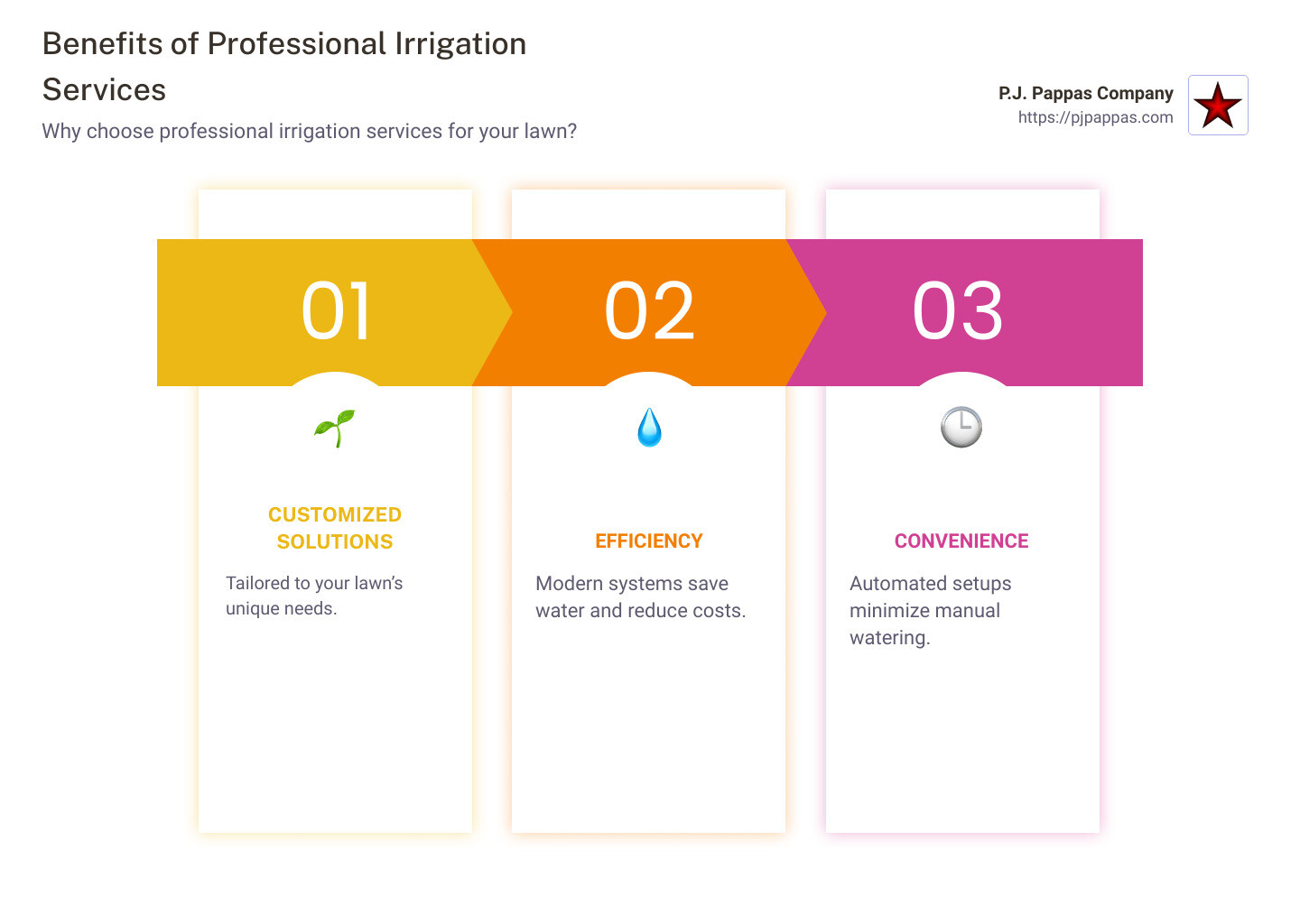
When it comes to maintaining a lush and healthy lawn, irrigation services play an essential role. They ensure your grass and plants get the right amount of water at the right time, helping them flourish without wasting precious water resources. If you’re wondering what you can expect from professional irrigation services, here’s a quick overview:
- Customized Solutions: Custom to your lawn’s unique needs.
- Efficiency: Modern systems save water and reduce costs.
- Convenience: Automated setups minimize manual watering.
- Improved Plant Health: Ensures even and sufficient watering.
- Increased Property Value: A well-maintained lawn boosts curb appeal.
My name is Peter Pappas, and I’ve been dedicated to providing top-notch irrigation services since 1987. At P.J. Pappas Company, we specialize in designing, installing, and maintaining efficient and reliable irrigation systems. My team and I are committed to helping you achieve the lawn of your dreams.
Understanding Different Types of Irrigation Systems
Choosing the right irrigation system is crucial for maintaining a healthy, vibrant lawn. Let’s explore the main types of irrigation systems: sprinkler systems, drip irrigation, in-ground systems, and above-ground systems.
Sprinkler Systems
Sprinkler systems are one of the most common types of irrigation systems. They work by spraying water over your lawn and garden, mimicking natural rainfall. These systems can be customized with different spray heads and nozzles to ensure even water distribution.
Key Benefits:
– Versatility: Suitable for lawns, flower beds, and gardens.
– Ease of Use: Automated timers make it easy to schedule watering.
– Coverage: Can cover large areas efficiently.
Drip Irrigation
Drip irrigation delivers water directly to the plant roots through a network of hoses and emitters. This method is highly efficient and reduces water waste.
Key Benefits:
– Water Efficiency: Minimizes evaporation and runoff.
– Targeted Watering: Ideal for gardens, flower beds, and shrubs.
– Healthier Plants: Reduces the risk of disease by keeping foliage dry.
In-Ground Systems
In-ground systems are permanently installed below the surface of your lawn. They consist of a network of pipes and sprinkler heads that pop up when the system is activated.
Key Benefits:
– Aesthetics: Hidden underground, making them less intrusive.
– Durability: Protected from weather and physical damage.
– Convenience: Automated and easy to maintain.
Above-Ground Systems
Above-ground systems are portable and can be easily moved around your lawn. They typically consist of hoses connected to a series of sprinklers or drip emitters.
Key Benefits:
– Flexibility: Can be repositioned as needed.
– Cost-Effective: Generally cheaper to install than in-ground systems.
– Accessibility: Easy to set up and adjust.

Understanding these different types of irrigation systems can help you choose the best option for your lawn. Each system has its unique advantages, so consider your specific needs and landscape requirements.
Key Factors to Consider When Choosing an Irrigation System Company
Choosing the right irrigation system company is crucial for ensuring your lawn remains lush and healthy. Here are some key factors to consider:
Experience
Experience matters. A company with years of experience, like P.J. Pappas, has likely encountered and solved a wide range of irrigation challenges. This expertise ensures that they can handle any situation efficiently and effectively.
Reputation
A good reputation is a strong indicator of quality service. Look for companies with positive reviews and testimonials from satisfied customers.
Customer Service
Excellent customer service is essential. You want a company that is responsive, professional, and willing to go the extra mile to meet your needs.
Warranties
Warranties provide peace of mind. A good company will stand by their work and materials. For example, P.J. Pappas offers a comprehensive warranty on their services, showing confidence in their products and services.
Customization
Every lawn is unique, and your irrigation system should be too. Look for a company that offers customized solutions tailored to your specific landscape. P.J. Pappas designs and installs systems that meet the unique needs of each client, ensuring optimal performance and water efficiency.
By considering these factors, you can make an informed decision and choose an irrigation system company that will keep your lawn looking its best.
Top Features of Modern Irrigation Systems
Moisture Sensors
Modern irrigation systems often come with moisture sensors. These sensors measure the moisture level in the soil and adjust the watering schedule accordingly. This ensures your lawn gets the right amount of water without overwatering. Using moisture sensors can reduce water usage by up to 35%.
Water Gauges
Water gauges help you monitor how much water your irrigation system is using. This feature is crucial for maintaining water efficiency and ensuring your lawn is not being overwatered. By keeping an eye on water usage, you can make necessary adjustments to save water and reduce your water bills.
Timers
Timers are another essential feature. They allow you to set specific watering schedules, ensuring your lawn is watered at the most optimal times. This not only helps in conserving water but also ensures that your lawn remains healthy. Timers can be easily adjusted for different seasons, making it a versatile feature for year-round lawn care.
Eco-Friendly Designs
Modern irrigation systems are designed with eco-friendly features. These include using materials that are less harmful to the environment and systems that minimize water waste. For example, drip irrigation systems deliver water directly to the roots, reducing evaporation and runoff. This makes them a sustainable choice for watering your lawn.
Water Conservation
Water conservation is a significant benefit of modern irrigation systems. Features like moisture sensors, water gauges, and timers all contribute to using water more efficiently. Efficient irrigation can reduce water usage by 30-70%, which is crucial given the looming water crisis in many areas.
By focusing on these top features, you can ensure that your irrigation system is both effective and environmentally friendly. This not only keeps your lawn healthy but also contributes to broader water conservation efforts.
How Much Does an Irrigation System Cost?
When considering an irrigation system, understanding the costs involved is crucial. Let’s break it down into simple terms.
Average Costs
The average cost to install a sprinkler system is around $3,600 for a quarter-acre yard. However, costs can range from $2,200 to $5,000 depending on various factors. For smaller yards, you might pay as little as $1,000, while larger, multi-acre properties could see costs soar to $10,000 or more.
Cost Per Square Meter
For a more detailed breakdown, irrigation system installation costs generally range from 20 cents to $1 per square foot. The price per square foot often decreases for larger projects, making it more cost-effective to install systems on bigger properties.
Factors Affecting Cost
Several factors influence the cost of your irrigation system:
- Type of System: Above-ground systems are cheaper, costing between $1,500 and $3,500. In-ground systems are more expensive, with costs exceeding $10,000 for an acre.
- Lawn Size: Larger lawns require more equipment and labor, increasing the overall cost.
- Number of Watering Zones: More zones mean more complexity, which can drive up costs.
- Soil Type: Different soils may require specific types of irrigation, affecting the installation cost.
- Additional Features: Smart controllers, moisture sensors, and other high-tech features can add to the cost but offer greater efficiency.
Residential vs. Commercial
Residential irrigation systems are typically simpler and less expensive than commercial systems. Homeowners might spend between $2,200 and $5,000 for a quarter-acre yard.
In contrast, commercial systems are often more complex, requiring additional zones and advanced features like weather-based controllers. These systems can easily exceed $10,000, especially for large properties like sports fields or corporate landscapes.
Knowing these costs and factors can help you make an informed decision when choosing an irrigation system. Next, we’ll dig into the various irrigation services offered by professionals.
Irrigation Services Offered by Professionals
Installation
Professional installation is crucial for a well-functioning irrigation system. Experts like P.J. Pappas ensure that every component—pipes, valves, and sprinklers—is installed correctly. This guarantees optimal water distribution and efficient operation. Plus, they customize the installation to suit your lawn’s unique features, ensuring maximum coverage and minimal water waste.
Maintenance
Regular maintenance keeps your irrigation system running smoothly. This includes checking for leaks, adjusting sprinkler heads, and ensuring that timers work correctly. Professional maintenance can extend the life of your system, saving you money in the long run. For instance, P.J. Pappas offers ongoing support to keep your system in top shape year-round.
Repair
Even the best systems need repairs from time to time. Common issues include broken sprinkler heads, clogged nozzles, and faulty valves. Professionals can quickly diagnose and fix these problems, preventing more extensive damage. Using high-quality parts, companies like P.J. Pappas ensure your system remains reliable and efficient.
Seasonal Adjustments
Different seasons require different irrigation needs. In the summer, your lawn might need more water, while in the fall, you might need less. Professionals adjust your system’s settings to match seasonal requirements, ensuring your lawn stays healthy year-round. This not only conserves water but also keeps your landscape looking its best.
Winterization
Winterization is essential to protect your irrigation system from freezing temperatures. This process involves draining the water from the system and blowing out any remaining water with compressed air. Proper winterization prevents pipes from cracking and valves from breaking. Companies like P.J. Pappas offer this service to ensure your system is ready to go when spring arrives.
Next, we’ll answer some frequently asked questions about irrigation services to help you better understand the process and benefits.
Frequently Asked Questions about Irrigation Services
How much is a good irrigation system?
The cost of a good irrigation system can vary widely. On average, homeowners can expect to spend between $2,500 and $4,500 for a typical residential system. Several factors affect the cost:
- Size of the yard: Larger yards require more materials and labor.
- Type of system: Drip irrigation systems are usually cheaper than in-ground sprinkler systems.
- Customization: Custom solutions for specific plants or landscapes can increase costs.
- Quality of materials: High-quality components like those from Rain Bird or Hunter can be more expensive but offer better durability.
How does irrigation work?
Irrigation systems work by delivering water from a source to your plants through a network of pipes, valves, and emitters. Here’s a simplified breakdown:
- Water Source: This can be a reservoir, tank, well, or even a municipal water supply.
- Pipelines: These carry water from the source to different parts of your yard.
- Valves and Gates: These control the flow of water, ensuring it goes where it’s needed.
- Emitters: These include sprinkler heads or drip emitters that release water to your plants.
What are the irrigation facilities?
Irrigation facilities include various components that make up the system:
- Canals and Laterals: Channels that transport water from the source to the fields.
- Ditches and Conduits: Smaller channels that distribute water within the fields.
- Gates and Pumps: Devices that control and move water through the system.
These facilities work together to ensure your landscape gets the right amount of water efficiently and effectively.
Next, we’ll dive into the top features of modern irrigation systems to highlight what makes them so effective and eco-friendly.
Conclusion
Choosing the right irrigation system company can make a huge difference in the health and beauty of your lawn. We’ve covered the various types of systems, key factors to consider, and the modern features that can save you time, money, and water. Now, let’s wrap things up by highlighting what makes P.J. Pappas Company the perfect choice for your irrigation needs.
P.J. Pappas Company specializes in designing, installing, and maintaining top-notch irrigation and landscape lighting systems. With over 37 years of experience, we focus on delivering customized solutions that meet your specific needs. Our expertise ensures precise installation and reliable performance, whether you have a small residential lawn or a large commercial property.
We pride ourselves on our dedication to customer satisfaction. Our team stays updated with the latest technology and best practices, guaranteeing that you receive the most efficient and effective solutions available. Plus, we offer ongoing maintenance and support to keep your systems running smoothly year after year.
For a free consultation and estimate, contact us today. Let’s make your landscape thrive with the best irrigation services available.