
Designing a Sprinkler System: Top 5 Efficient Tips 2024
Efficiency in Sprinkler System Design: A Quick Guide
When it comes to designing a sprinkler system, ensuring efficiency can save you valuable resources: time, water, and money. Here’s a quick overview to get you started right away:
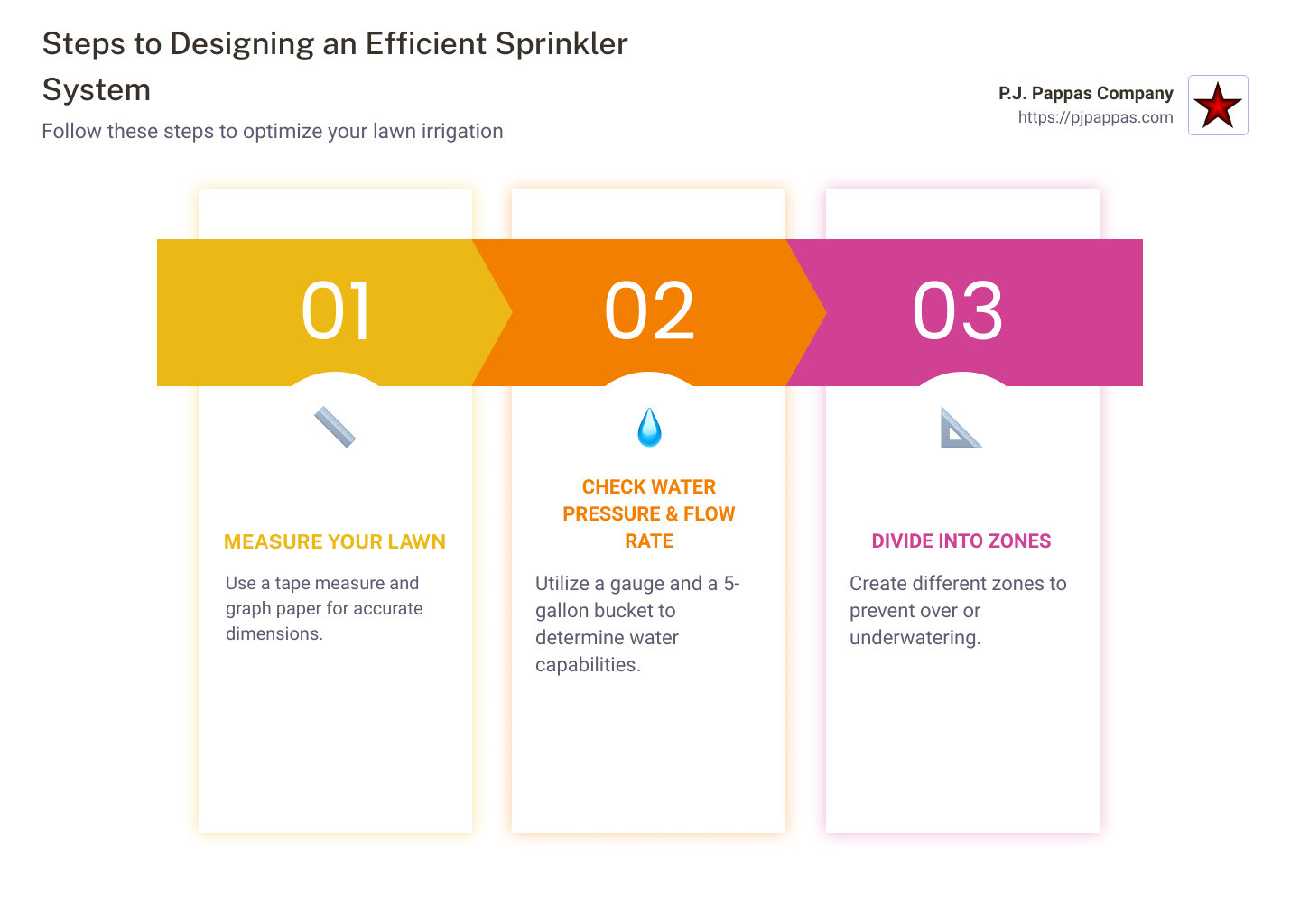
- Start by Measuring Your Lawn: Accurate dimensions are crucial.
- Check Water Pressure and Flow Rate: Use a gauge and a 5-gallon bucket.
- Divide Your Lawn into Zones: Different zones help prevent over or underwatering.
- Choose Appropriate Sprinkler Heads: Pop-ups, rotors, or rotary nozzles—pick based on the area size.
I’m Peter Pappas, owner of P.J. Pappas Company. With over 37 years of experience in designing sprinkler systems and landscape lighting, my team and I are committed to delivering efficient, reliable lawn care solutions tailored to your specific needs. We promise to make your lawn not just green—but also smartly irrigated.
Understanding the Basics of Designing a Sprinkler System
Designing a sprinkler system is more than just laying out a few pipes and nozzles. It requires a good understanding of layout, water dynamics, and basic physics to ensure efficiency and effectiveness. Let’s dive into the key components and steps involved.
Key Components of a Sprinkler System
Piping: The backbone of your sprinkler system, pipes transport water from the source to the sprinkler heads. Use durable materials like PVC or polyethylene to avoid leaks and ensure longevity.
Nozzles: These are the endpoints where water is distributed. Different nozzles suit different needs—spray heads for small areas, rotors for medium to large spaces, and rotary nozzles for precision.
Controllers: Also known as timers, controllers automate your watering schedule. Modern controllers can even be Wi-Fi enabled, allowing for remote adjustments and smart scheduling.
Manifolds: These are essential for distributing water to various zones in your yard. Properly placed manifolds ensure even water distribution and prevent pressure drops.
How to Measure Your Lawn
Accurate measurements are crucial for designing an efficient sprinkler system. Here’s how to get it right:
- Tape Measure: Measure the length and width of your lawn. Note any irregular shapes or obstacles like trees and flower beds.
- Graph Paper: Draw your lawn to scale on graph paper. Use one inch to represent 10 feet for a clear, manageable layout. Be sure to include all landscape features, including hardscapes like driveways and walkways.
- Sketch Your System: With your measurements in hand, sketch your irrigation system. Mark the locations of valves, controllers, piping, and manifolds. This helps visualize the system and plan for optimal water distribution.
By understanding these basics and accurately measuring your lawn, you set the foundation for an efficient and effective sprinkler system. Next, we’ll delve into planning your system for optimal water use.
Planning Your Sprinkler System for Optimal Water Use
Checking Water Pressure and Flow
Water pressure and flow rate are crucial for a well-functioning sprinkler system. Here’s how to check them:
- Water Pressure: Attach a water pressure gauge to an outside faucet. Turn on the water and record the reading in pounds per square inch (PSI). Most systems need between 40 to 60 PSI. Check it at the time you plan to use the system to get an accurate reading.
- Flow Rate: Use a 5-gallon bucket and a timer. Place the bucket under an outside faucet, turn the faucet on full, and time how long it takes to fill the bucket. Calculate the flow rate using the formula:
[
\text{Gallons (container size)} \div \text{Time (seconds)} \times 60 = \text{GPM (Gallons per minute)}
]
Zoning Your Property
Hydrozones help you avoid over or underwatering by grouping plants with similar water needs. Here’s how to create them:
- Sunlight and Water: Identify areas that get full sun and those that are shaded. Shady areas need less water.
- Soil Type: Determine if your soil is clay, loam, or sandy. Clay holds water longer, loam is ideal, and sandy soil drains quickly. Different soils need different watering schedules.
- Types of Plants: Group plants based on their water needs. For example, your lawn and flower beds may need more water than native plants.
By checking your water pressure and flow, and creating hydrozones based on sunlight, water needs, and soil type, you can plan a sprinkler system that uses water efficiently.
Next, we’ll explore choosing the right sprinkler heads for your system.
Choosing the Right Sprinkler Heads
Sprinkler Head Placement for Maximum Coverage
When it comes to designing a sprinkler system, choosing the right sprinkler heads is crucial. Let’s dive into the different types and how to place them for maximum coverage.
Pop-up Sprinkler Heads
Pop-up heads are great for medium areas like lawns. They pop up when in use and retract when off, keeping your yard tidy. These heads can spray anywhere from 4 to 19 feet. They’re affordable, easy to repair, and ideal for even watering. However, they’re not suitable for precise watering needs, like flower beds or pots.
Rotors
For large areas, rotors are your go-to. They come in two types: impact and gear drive. Impact rotors are known for their distinctive “ratcheting” sound, while gear drive rotors are quieter and more efficient. Rotors cover a larger radius but need higher water pressure. They are adjustable, allowing you to tweak the spray distance and radius.
Spray Heads
Fixed spray heads are perfect for small to medium areas. They have a radius of 6 to 18 feet and deliver water to the same area consistently. These heads are great for patches of lawn or garden beds that need precise watering.
Rotary Nozzles
Rotary nozzles, also known as Eco-Stream Rotators, combine the benefits of pop-ups and rotors. They offer adjustable settings and work well with lower water pressures. They spray in a kaleidoscope pattern, providing superior water coverage.
Head-to-Head Coverage
Head-to-head coverage is essential for efficient watering. This means the spray from one head reaches the next, ensuring no dry spots. Think of it as overlapping circles that cover the entire area uniformly.
Spray Patterns
Different sprinkler heads offer various spray patterns. For example, some heads have full-circle patterns, while others are half-circle or quarter-circle. Choose the pattern that best fits the shape and size of the area you’re watering.
By understanding the types of sprinkler heads and their ideal placements, you can design a system that ensures your lawn and garden get the water they need, without waste.
Next, we’ll look at advanced techniques in sprinkler system design, including manifold placement and piping layout.
Advanced Techniques in Sprinkler System Design
Utilizing Technology for Precision
Designing a sprinkler system isn’t just about sticking pipes and sprinklers in the ground. Advanced techniques can make your system more efficient and easier to manage. Here’s how:
Manifold Placement
Manifolds are the hubs that distribute water to different zones. Placing them strategically can save water and improve system performance. Place manifolds centrally to reduce the length of pipes needed. This minimizes pressure loss and ensures even water distribution.
Piping Layout
The layout of your pipes is crucial. Main lines should be larger in diameter to handle high water flow. Use lateral lines to distribute water to sprinkler heads. Keep pipes in straight lines and avoid sharp bends to maintain pressure and flow. Consider using polyethylene (PE) pipes for flexibility and durability.
Orbit Sprinkler System Designer
Technology can simplify your design process. The Orbit Sprinkler System Designer (OSSD) lets you create a digital sketch of your property.
- Upload a bird’s-eye view of your yard.
- Trace the boundaries and features.
- Input one measured dimension for scale.
The tool calculates the best placement for heads, valves, and zones. It even generates a parts list and installation guide. This can save you hours of planning and prevent costly mistakes.
Rain Bird ARC8 Smart WiFi Controller
For precise control over your system, consider the Rain Bird ARC8 Smart WiFi Controller. This device allows you to:
- Program multiple independent zones to cater to different watering needs.
- Adjust watering schedules automatically based on weather conditions.
- Control your system remotely using a smartphone app.
This controller ensures your lawn gets the right amount of water, no matter the weather. It’s an excellent way to optimize water use and keep your garden healthy.
By leveraging these advanced techniques and technologies, you can design a sprinkler system that is both efficient and effective.
Next, we’ll discuss common challenges in sprinkler system design and how to overcome them.
Common Challenges and Solutions in Sprinkler System Design
Addressing Variations in Sun and Shade
Designing a sprinkler system comes with its own set of challenges. Let’s explore some common issues and how to tackle them effectively.
Slopes
Watering slopes or hills can be tricky. If sprinklers are installed at the bottom of a hill, water tends to pool, creating soggy patches. This can lead to fungus growth and other lawn diseases.
Solution: Install sprinkler heads at different elevations along the slope. Consider using drip irrigation for precise water delivery. This helps avoid pooling and ensures even moisture distribution.
Different Plant Types
Shrubs, trees, flowers, and grass all have different water needs. Giving the same amount of water to every plant can waste water and harm plant health.
Solution: Use low-volume drip irrigation to customize water delivery. Design a system with multiple independent zones. This allows you to schedule watering according to each area’s specific needs.
Corners, Odd Shapes, or Strips
Unusual property lines can leave some areas over-watered and others under-watered.
Solution: Utilize Variable Arc Nozzles (VAN). These nozzles deliver precise, even coverage in odd-shaped areas. They are excellent for corners and narrow strips.
Small Yards
Smaller areas often lead to water wastage on sidewalks, driveways, or against the house.
Solution: Implement low-volume Rain Bird SQ Nozzles. These nozzles water in a square pattern, reducing over-watering and run-off in small properties.
Controller Settings and Zone Customization
Over- or under-watering often occurs because different parts of your yard have varying sun exposure.
Solution: Use a smart controller like the Rain Bird ARC8 Smart WiFi Controller. This controller allows multiple independent programs, so you can set additional watering times for sunnier areas. Customize each zone based on sunlight, soil type, and plant water needs.
By addressing these challenges, you can design a sprinkler system that is both efficient and effective, ensuring your lawn and garden thrive.
Next, we’ll delve into the best practices for choosing the right sprinkler heads for your system.
Conclusion
Designing a sprinkler system can be a complex task, but with the right approach, it becomes manageable and even rewarding. At P.J. Pappas Company, we specialize in creating customized irrigation solutions that cater to your lawn’s unique needs, ensuring long-term savings and optimal performance.
Frequently Asked Questions about Designing a Sprinkler System
How do you layout a sprinkler system for maximum efficiency?
To layout a sprinkler system for maximum efficiency:
- Evaluate Your Lawn: Measure the dimensions, note slopes, and identify obstacles.
- Check Water Pressure and Flow Rate: Use a water pressure gauge and a timer with a 5-gallon bucket.
- Divide Into Zones: Create hydrozones based on sunlight, soil type, and plant water needs.
- Choose the Right Sprinkler Heads: Select heads suitable for each area’s requirements.
- Plan for Head-to-Head Coverage: Ensure overlapping spray patterns for even coverage.
Using tools like the Orbit Sprinkler System Designer can simplify this process by providing a detailed layout and parts list.
What are the most common mistakes when designing a sprinkler system?
Common mistakes include:
- Inaccurate Measurements: Misjudging lawn size can lead to inefficient coverage.
- Ignoring Water Pressure: Low pressure can cause system failure.
- Poor Zoning: Not accounting for different plant needs can result in over or under-watering.
- Incorrect Sprinkler Head Placement: This can lead to dry spots or water waste.
Avoid these pitfalls by thoroughly planning and using smart controllers like the Rain Bird ARC8 Smart WiFi Controller.
How can technology improve the efficiency of a sprinkler system?
Technology plays a crucial role in enhancing sprinkler system efficiency:
- Smart Controllers: Devices like the Rain Bird ARC8 allow for precise scheduling and zone customization, adapting to weather changes and plant needs.
- Design Software: Tools such as the Orbit Sprinkler System Designer help in creating accurate layouts, ensuring optimal placement of heads and valves.
- Water Flow Sensors: These sensors monitor real-time water usage, helping to detect leaks and adjust flow rates.
By leveraging these technologies, you can achieve significant water savings and maintain a lush, healthy lawn.
For more detailed guidance and to explore our specialized irrigation solutions, visit P.J. Pappas Company. Our expertise ensures your sprinkler system is designed for efficiency, tailored to your landscape, and built to last.
