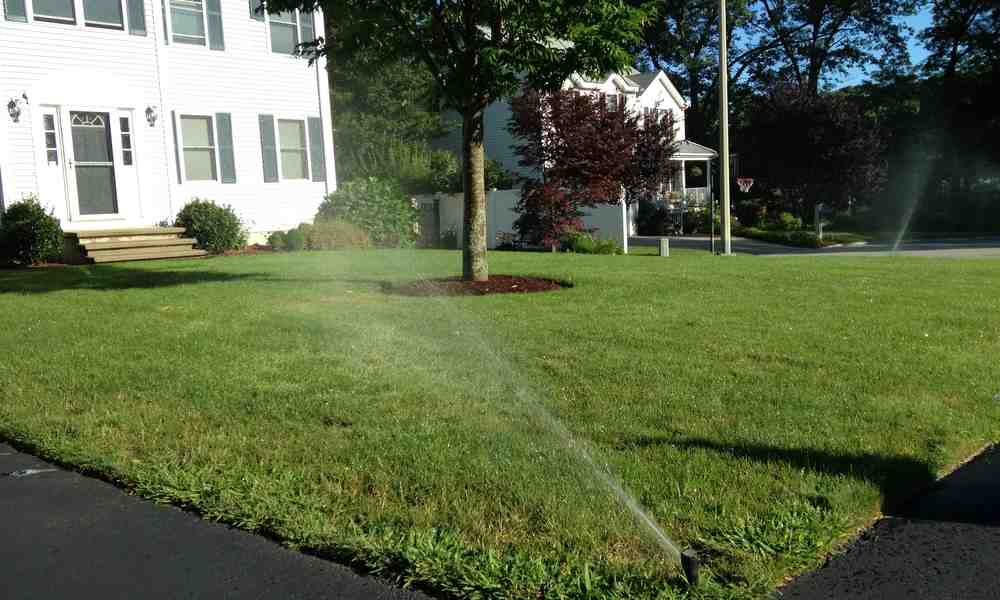

Lawn Sprinkler System Installation: 2024’s Top Guide
Lawn sprinkler system installation is a crucial step for maintaining a lush, healthy garden or lawn without the constant hassle of manual watering. Quick access to the essentials:
- Planning: Site assessment, understanding water source and local regulations.
- System Choices: Options from in-ground to drip irrigation.
- Installation: Step-by-step guide on setting up.
- Cost Factors: Analyzing the expenditure and potential savings.
- Maintenance: Keeping your system at peak performance.
Installing a sprinkler system not only conserves water by directing it exactly where and when it’s needed, but also boosts your property’s curb appeal and increases its market value. For homeowners and commercial property managers in Middlesex County, MA, the choice often boils down to selecting a system that combines efficiency with minimal maintenance.
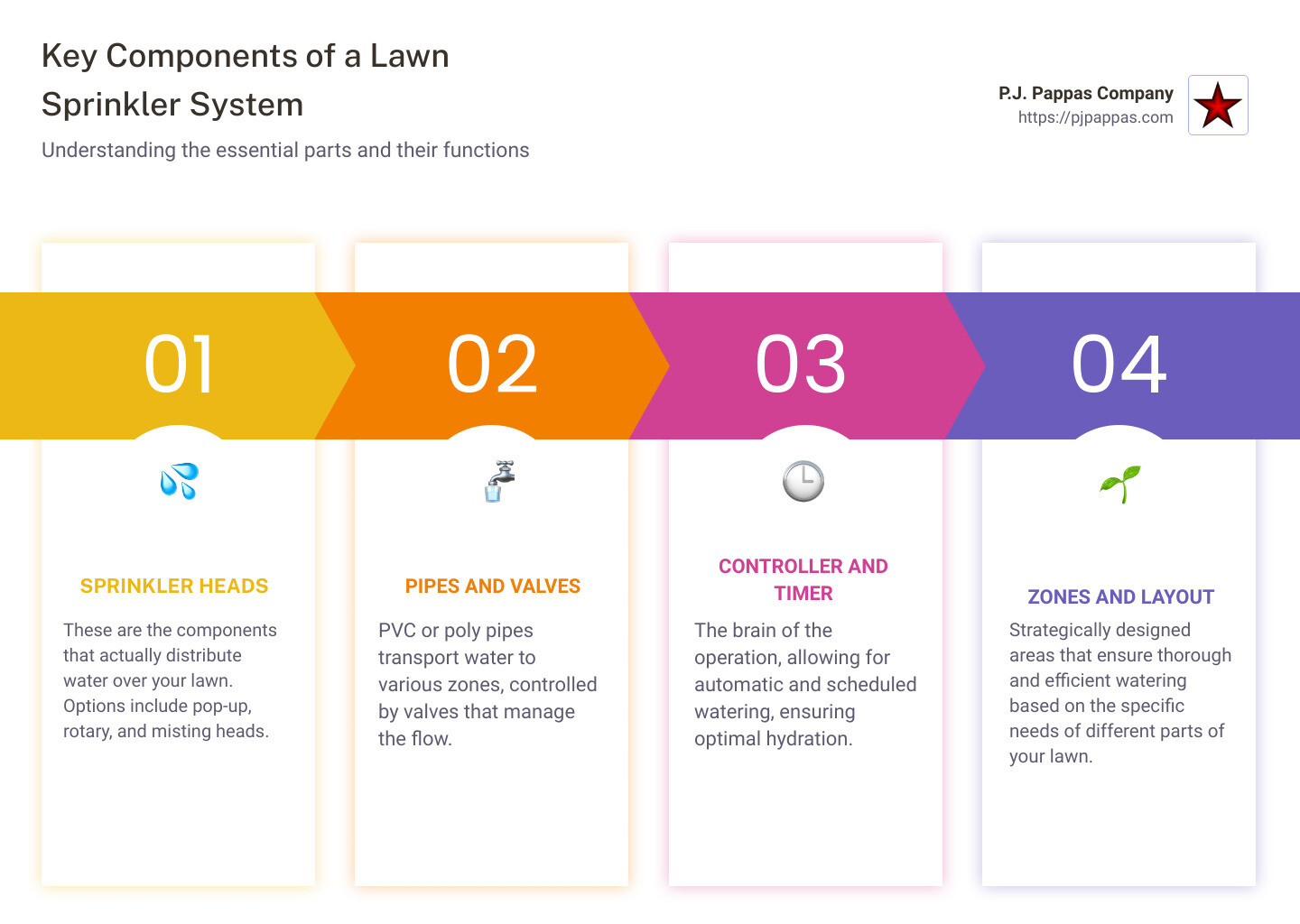
From the planning stages to final setup, each step of the installation process is designed to ensure that your lawn receives optimal irrigation with minimal waste. Stay tuned as we dive deeper into each phase of setting up your lawn sprinkler system, ensuring you have all the knowledge to either confidently tackle it yourself or to choose the best professionals for the job.
Planning Your Lawn Sprinkler System Installation
Site Assessment
Before you dig a single trench, knowing the layout of your land is crucial. Start with a detailed map of your property, noting all the key features like driveways, patios, and gardens. You’ll also want to mark areas with different sun exposures and slopes, as these affect how much water each zone needs.
Measure your yard accurately and create a scale drawing. This will help you plan the placement of sprinkler heads and piping more effectively.
Water Source
Identifying your water source is the next big step. If you’re connected to a municipal system, you’ll need to know the size of your water meter and your main water line. These details influence the flow rate and pressure of your system, which are critical for proper function.
For those using well water, the pump size will play a similar role. Ensure your system is designed to handle the specific flow rate and pressure your source provides.
Local Codes
Local building codes can have a big impact on the installation of your lawn sprinkler system. These regulations can dictate everything from the type of backflow preventers you need to the depth at which pipes must be buried.
It’s essential to check with your local building department or water authority to get the latest regulations. This prevents any legal issues and ensures your system operates within local guidelines.
Permits
Often overlooked, permits are a vital part of the planning process. Many localities require a permit before any irrigation work begins. This is particularly common when you connect a new system to a municipal water supply.
Apply for permits early to avoid delays. Your local city or county building department will provide all the necessary details and application forms.
With the site assessed, water source identified, and legalities checked, you’re ready to move on to choosing the right type of sprinkler system that suits your lawn’s specific needs. This preparation ensures that the installation process goes smoothly and your system works efficiently from the start.
Choosing the Right Type of Sprinkler System
Selecting the right type of sprinkler system is crucial for efficient watering and long-term satisfaction. Here’s a breakdown of the different types to help you make an informed decision:
In-ground Sprinkler Systems
In-ground systems are popular for their efficiency and aesthetic appeal, as they are barely visible when not in use. They involve underground piping with pop-up sprinkler heads that emerge when the system is activated. This type is ideal for comprehensive, uniform lawn coverage and is especially suited for large areas.
Above-ground Sprinkler Systems
Above-ground systems are less invasive to install since they don’t require digging. They typically consist of hoses and portable sprinkler heads that can be moved around as needed. This option is cost-effective and suitable for small lawns or gardens where temporary solutions are preferred.
Automatic Sprinkler Systems
Automatic systems offer the ultimate convenience. They can be programmed to water your lawn at specific times, providing consistent moisture levels without manual intervention. This type is perfect for busy homeowners who want to maintain a lush lawn with minimal effort.
Stationary Sprinkler Heads
Stationary sprinklers are fixed in one place and water a specific area. They are simple, inexpensive, and best for small, uniform areas where no extensive coverage is needed.
Rotary Sprinkler Heads
Rotary sprinklers rotate as they water, covering a larger area than stationary heads. They are ideal for medium to large lawns. The rotating motion ensures even coverage and reduces the risk of over-watering.
Drip Irrigation
Drip irrigation is the most water-efficient method. It delivers water directly to the base of the plant, minimizing evaporation and runoff. This system is perfect for gardens with dense plantings or for targeting specific areas like flower beds and vegetable patches.
Each type of sprinkler system has its own set of advantages tailored to different needs and lawn configurations. Consider factors like lawn size, water availability, and maintenance preferences when choosing your system. For specialized advice and professional installation in Middlesex County, MA, contact P.J. Pappas Company. Their expertise ensures that you select the best system for your landscape, guaranteeing optimal performance and durability.
Step-by-Step Guide to Installing a Lawn Sprinkler System
Step 1: Design and Layout
Begin your lawn sprinkler system installation by creating a detailed sketch of your property. Use graph paper to draw your home, driveway, sidewalks, and any significant landscaping features. Mark the locations of trees, shrubs, and garden beds that will influence sprinkler placement. Divide your yard into zones based on water requirements and landscape features. Each zone will have its own set of sprinklers to ensure efficient watering.
Step 2: Digging and Trenching
Once your layout is finalized, it’s time to start trenching. Use flags or stakes to mark where the pipes will go according to your design. The typical trench depth should be between 6 to 12 inches, depending on the pipe size and frost line in your area. For safety, call your local utility companies to mark any underground lines before you dig. Consider renting a power trencher from a local tool rental to make the job easier and quicker.
Step 3: Installing Pipes and Valves
Choose the right type of pipe for your climate and soil. PVC pipe is durable and ideal for most climates, but in areas with severe freezing temperatures, poly pipe might be better due to its flexibility and frost resistance. Lay out the pipes along the trench lines and connect them to a valve manifold, which acts as the central control point for the water flow to the zones. Ensure all connections are secure to prevent leaks.
Step 4: Setting Up Sprinkler Heads
Install different types of sprinkler heads based on the needs of each zone. Pop-up sprinkler heads are great for lawns as they stay hidden and protected when not in use. Rotary heads cover large areas of grass with a rotating stream, while misting heads are perfect for delicate flowers and shrubs. Adjust the angles and distances of the sprinklers to ensure complete coverage without watering non-plant areas.
Step 5: Wiring and Controller Setup
Connect the electrical wires from the valve manifold to the programmable timer, usually mounted on a wall near your main water supply. This timer controls when each zone gets watered, making your sprinkler system fully automatic. Make sure all electrical connections are waterproof and safe. If unsure about handling electrical components, consider hiring a professional.
Step 6: Final Adjustments and Testing
After installation, turn on the water to flush out the system from any debris that might have entered during installation. Once the system is clean, install the sprinkler heads and make final adjustments to their positions and settings to ensure even coverage. Test the system by running it through a complete watering cycle to check for any missed spots or leaks.
System flush is crucial at this stage to clear out any impurities and ensure the system operates at its best. Regularly check and adjust the sprinkler heads as needed, especially after lawn mowing or other yard activities that might disturb them.
By following these steps, you can ensure a successful installation of your lawn sprinkler system, providing your yard with efficient and effective irrigation. For residents of Middlesex County, MA, P.J. Pappas Company offers expert installation services to help you achieve the perfect lawn.
Cost Considerations for Lawn Sprinkler System Installation
When planning to install a lawn sprinkler system, understanding the costs involved is essential. Let’s break down the financial aspects of lawn sprinkler system installation, including the differences between DIY and professional setups, as well as ongoing maintenance expenses.
Installation Costs
The cost to install a lawn sprinkler system can vary widely based on several factors. These include the size of your lawn, the type of system you choose, and whether you opt for a DIY or professional installation. Generally, prices range from $2,400 to $4,200 for a professionally installed system. This cost includes planning, parts like sprinkler heads and piping, and labor.
For those considering a DIY approach, the initial cost can be lower. Simple above-ground systems can cost around $300 for basic components. However, more complex in-ground systems require more expensive materials and potentially renting heavy equipment, which can bring costs closer to $1,000 or more, depending on the scale of the project.
DIY vs. Professional
Choosing between a DIY or professional installation depends on your skills, budget, and the complexity of the system you desire.
- DIY: This option can save money upfront and might be suitable for smaller or simpler sprinkler systems. It allows you to work at your own pace and learn about your lawn’s specific needs. However, DIY installations can be risky as mistakes can lead to poor coverage, water waste, or future repairs.
- Professional: Hiring experts like P.J. Pappas Company ensures that your system is installed correctly from the start. Professionals can handle any lawn size and system complexity, and they often offer warranties and ongoing maintenance services. While the initial cost is higher, the long-term benefits of reduced maintenance and optimal water use can outweigh these costs.
Maintenance Costs
Maintaining a sprinkler system is crucial to ensure it operates efficiently and lasts for years. Typical maintenance tasks include winterizing the system, which costs between $50 and $230, and regular repairs, which can range from $130 to $400. These costs help prevent larger expenses down the road due to system failures or inefficiencies.
Professionals like P.J. Pappas Company often provide maintenance packages which can be a cost-effective way to manage these expenses. These packages ensure your system is checked and maintained regularly, which can greatly extend its lifespan and performance.
In conclusion, while the upfront costs of a lawn sprinkler system can be significant, choosing the right installation method and maintaining the system properly can offer long-term savings and benefits. For those in Middlesex County, MA, partnering with a specialized company like P.J. Pappas Company can provide peace of mind and ensure a high-quality installation tailored to your property’s needs.
Frequently Asked Questions about Lawn Sprinkler Systems
How much does it typically cost to install a lawn sprinkler system?
The cost of installing a lawn sprinkler system varies widely based on the size of your lawn, the type of system you choose, and whether you opt for a DIY installation or hire professionals. Generally, prices range from $2,400 to $4,200 for most residential systems. That additional features like rain and soil sensors or smart system upgrades can increase the cost. For a detailed breakdown, considering both initial installation and long-term maintenance costs is crucial.
What are the main benefits of having a lawn sprinkler system?
Having a lawn sprinkler system installed offers several benefits:
– Consistent Watering: Automated systems ensure that your lawn receives the right amount of water at the right times, promoting healthier growth and greener grass.
– Convenience: With timers and programmable systems, you can set your sprinklers to operate automatically, saving you time and effort.
– Water Conservation: Advanced systems can adjust watering based on weather conditions and soil moisture, significantly reducing water waste and lowering utility bills.
– Increased Property Value: A well-maintained lawn can enhance curb appeal and potentially increase your home’s market value. Research indicates an expected ROI of 86% on sprinkler system installations.
How do I maintain my lawn sprinkler system?
Maintaining your lawn sprinkler system is essential for its longevity and efficiency. Here are some key maintenance tips:
– Regular Inspections: Check for leaks, broken parts, or clogged sprinkler heads. These issues are common and can usually be fixed quickly.
– Seasonal Adjustments: Adjust the watering schedule based on seasonal weather conditions. Less water is generally needed during cooler months.
– Winterizing: In colder climates, it’s crucial to winterize your sprinkler system to prevent freezing and damage. This typically costs between $50 and $230 and involves professionals using compressed air to blow out remaining water in the system.
– Professional Check-ups: Having a professional service your system annually can help catch issues before they become major problems, ensuring your system remains in top condition.
By understanding these aspects of lawn sprinkler system installation and maintenance, you can make informed decisions that ensure a healthy, beautiful lawn year-round. If you’re in Middlesex County, MA, consider reaching out to P.J. Pappas Company for expert installation and maintenance services.
Conclusion
As we wrap up our discussion on lawn sprinkler system installation, it’s clear that the key to a lush, green lawn is not just about installing the system but also maintaining it effectively. Here are a few maintenance tips to keep your sprinkler system running smoothly:
- Regular Inspections: Check your system each season for any signs of damage or wear. Look for leaks, broken sprinkler heads, and clogged lines. Early detection can save you from costly repairs down the line.
- Seasonal Adjustments: Adjust the timer and settings on your sprinkler system according to the seasonal weather conditions. This ensures your lawn gets the right amount of water without wastage.
- Winterization: In colder climates, it’s crucial to winterize your sprinkler system to prevent freezing and cracking of the pipes. This process typically involves draining the system and may require professional help.
A well-maintained sprinkler system not only keeps your lawn healthy but also conserves water and saves money on your water bill.
If you’re considering installing a new lawn sprinkler system or need help maintaining your current system in Middlesex County, MA, we at P.J. Pappas Company are here to help. With over 37 years of specialized experience in lawn irrigation, we ensure precision installation and dedicated service. Our team is equipped to handle every aspect of your sprinkler system needs, from design and installation to regular maintenance.
For those looking for professional and reliable lawn sprinkler system services, don’t hesitate to contact us. We’re committed to providing you with the best solutions tailored to your specific landscaping needs. Let us help you achieve the beautiful and sustainable lawn you’ve always wanted.