
2024 Guide: Average Cost to Install Irrigation System
Introduction
When considering the average cost to install irrigation system, homeowners and commercial property managers should expect variations based on several factors like the size of the area, type of system preferred, and specific landscaping requirements. In Middlesex County, MA, where landscaping needs can vary greatly, having a reliable and efficient irrigation system isn’t just a convenience—it’s essential for maintaining the health and appearance of your property.
Irrigation systems not only save time and conserve water, but they also ensure that your lawn and plants receive the precise amount of hydration needed without wastage. Specializing in both in-ground and above-ground systems, P.J. Pappas Company brings over 37 years of dedicated experience to designing and installing these critical components of landscape management. Their expertise guarantees not only the health of your lawn but also the enhancement of your property’s aesthetic and functional value.
By turning to a focused and experienced provider like P.J. Pappas, you gain peace of mind knowing that your irrigation solution is not only tailored to your unique needs but also installed with craftsmanship and care. As we explore further in this article, we’ll delve into what factors specifically influence installation costs and how these investments can dramatically improve property management efficiency and effectiveness.
Key Factors Influencing the Average Cost to Install an Irrigation System
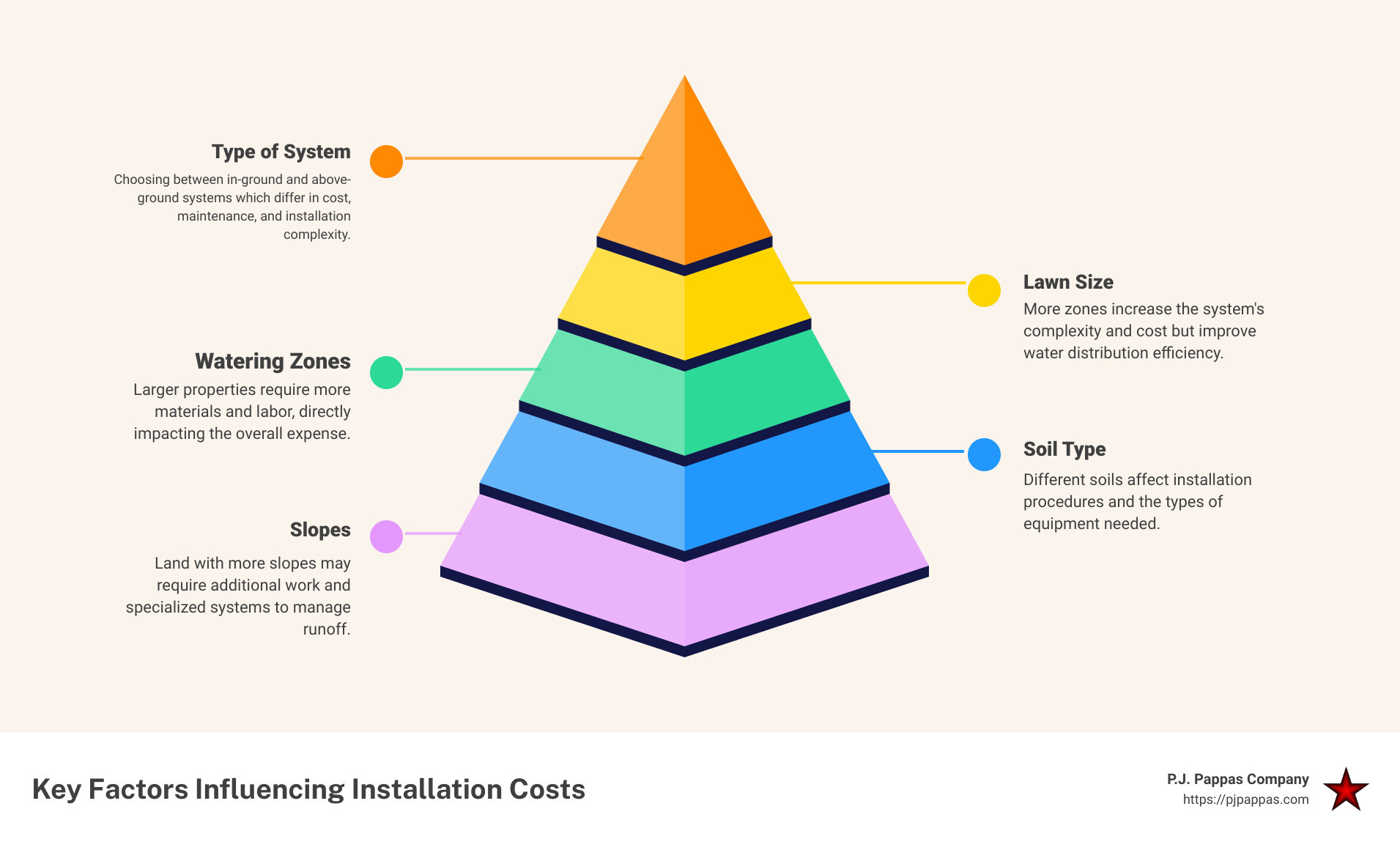
When considering the installation of an irrigation system, several key factors come into play that can significantly impact the cost. Understanding these elements will help you budget appropriately and ensure you make informed decisions for your property.
Lawn Size
The size of your lawn is a primary factor in determining the cost of installing an irrigation system. Larger lawns require more materials, more labor, and potentially more complex system designs to ensure adequate coverage. For instance, a quarter-acre lot might incur costs ranging from $2,200 to $5,000, depending on other factors discussed below.
Sprinkler System Type
There are two main types of sprinkler systems: above-ground and in-ground. Above-ground systems are generally less expensive, ranging from $1,500 to $3,500, but they are more visible and can be prone to damage. In-ground systems, while more costly—potentially exceeding $10,000 for large properties—offer greater aesthetics and efficiency, and are less susceptible to accidental damage.
Watering Zones
Creating different watering zones within your lawn allows for more precise water control and can help in conserving water by only watering areas as needed. Each additional zone can add $500 to $1,000 to the total cost, depending on the complexity and the equipment required.
Soil Type
The type of soil on your property can also affect installation costs. Dense, rocky soils are more challenging to dig through and may require specialized machinery, which increases labor costs. Conversely, softer soils make the installation process quicker and less costly.
Slopes
Properties with significant slopes or uneven terrain may require additional design considerations, such as tiered watering zones or specialized drainage systems like French drains, which can add to the cost. Installing a French drain, for example, can cost around $6,200 on average.
By understanding these key factors, you can better anticipate the average cost to install an irrigation system and plan your budget accordingly. With the expertise of P.J. Pappas, you can trust that your irrigation system will be designed and installed to meet the unique needs of your landscape, ensuring optimal efficiency and cost-effectiveness. We’ll look at the specific costs associated with different system types and property sizes.
Breakdown of Costs by System Type
Above-Ground Systems
Above-ground irrigation systems are typically the more budget-friendly option when considering the average cost to install an irrigation system. They range from $1,500 to $3,500, largely depending on your yard size. These systems are easier to install and maintain, which cuts down on initial labor costs.
Affordability: Above-ground systems require less digging and infrastructure, which significantly reduces the upfront costs. For a basic setup, homeowners might spend as little as $1,000, especially if the yard is small.
Customization: These systems offer flexibility. You can easily adjust hoses and sprinkler heads as your garden grows or changes, making it a practical choice for those who like to tweak their landscaping frequently.
Maintenance: The most significant downside is the exposure to elements and damage risks. Hoses lying on the ground can suffer from wear and tear or become tripping hazards. However, basic maintenance can often be handled by the homeowner, saving on professional service fees.
In-Ground Systems
In contrast, in-ground systems are more expensive but offer greater benefits in terms of automation, aesthetics, and long-term durability. Installation costs can exceed $10,000 for large properties, but they bring added value to your home and landscape.
Automation: Most in-ground systems come with automated features like timers and sensors that adjust watering based on weather conditions. This not only saves water but also ensures your lawn receives exactly what it needs without manual intervention.
Aesthetics: In-ground systems are virtually invisible, maintaining the natural beauty of your landscape without the clutter of visible hoses or sprinklers.
Winterization needs: Living in areas with freezing temperatures means your system needs winterizing to prevent damage. This involves additional seasonal service but protects the system’s longevity.
By choosing the right system type for your needs and budget, you can optimize your investment and enjoy a lush, healthy landscape. In the next section, we’ll explore how property size impacts installation costs, helping you further tailor your irrigation system plan.
Installation Costs by Property Size
When planning to install an irrigation system, the size of your property plays a significant role in determining the overall cost. Here, we break down the expected costs for different property sizes, providing a clearer picture of what you might expect to invest.
5,000 sq. ft. Property
For a smaller property, such as one around 5,000 square feet, the installation cost can range from $1,000 to $3,000. This cost variation depends on the system type and the complexity of the installation. For example, a basic above-ground system may lean towards the lower end, while an in-ground system with multiple zones could approach the higher end of this range.
10,000 sq. ft. Property
As the property size increases, so does the cost. For a 10,000 square foot area, you might expect to pay between $3,000 and $6,000. The increase accounts for additional materials and labor required to cover the larger area, as well as potentially more sophisticated system features like automation or advanced controllers.
20,000 sq. ft. Property
Doubling the property size to 20,000 square feet, installation costs can range from $6,000 to $12,000. Larger properties often require more zones and possibly more complex systems to efficiently manage water distribution, which can drive up the cost.
40,000 sq. ft. Property
For expansive properties, such as those around 40,000 square feet, the costs can significantly jump, typically ranging from $12,000 to $24,000 or more. These installations may require extensive planning and potentially custom solutions to address unique landscaping features or varied terrain, which adds to the complexity and cost.
Key Considerations:
– More Zones, Higher Cost: Larger areas usually need to be divided into more zones to ensure even watering. Each additional zone can add $500 to $1,000 to your total cost.
– Type of System: Above-ground systems are generally less expensive but might not be suitable for large properties due to their aesthetic and practical limitations. In-ground systems, while more costly upfront, offer greater efficiency and are less obtrusive.
– Custom Requirements: Unique property features such as slopes, varied soil types, or specific landscaping designs can increase installation complexity and cost.
Understanding these cost factors will help you budget more effectively for your irrigation system installation. In the next section, we will discuss additional costs and considerations that could affect your overall investment in an irrigation system.
Additional Costs and Considerations
When planning for an irrigation system, understanding all potential costs is crucial. Beyond the basic installation, there are several additional expenses that homeowners should consider.
Permits
Most local governments require permits for irrigation system installation. These permits ensure that the installation complies with local regulations, which may include water usage and conservation standards. The cost of these permits can vary widely depending on your location, so check with local authorities early in the planning process. Typically, if you hire a professional service like P.J. Pappas Company, they will handle the permit process for you, incorporating the cost into their overall quote.
Maintenance Costs
Maintaining an irrigation system is vital to ensure its longevity and efficiency. The average maintenance costs can range from $50 to $150 annually for basic winterization services to prevent freeze damage. Spring start-up services, which get your system ready for the season, can cost between $75 and $160. These prices may vary based on the number of zones in your system.
Regular maintenance also includes occasional repairs, such as replacing sprinkler heads, which can cost between $65 and $90 for professional service or $2 to $12 per head if you choose to do it yourself. An annual backflow test, required in most states, typically costs $50 to $100.
Special Upgrades
For homeowners looking to enhance their irrigation system, there are several special upgrades to consider:
- Drip Irrigation: This system is ideal for flower beds and gardens, delivering water directly to the roots. This method is highly efficient, reducing water waste and ensuring that plants receive the moisture they need without overwatering. Adding a drip irrigation system can increase your initial cost but save money in the long term through reduced water usage.
- Rainwater Collection Systems: Especially useful in areas with water usage restrictions or for eco-conscious homeowners, these systems collect and store rainwater for irrigation use. While the upfront cost can be significant, the long-term savings on water bills and the positive impact on the environment can be substantial.
Both of these systems not only add to the upfront cost but also may require specialized knowledge for installation and maintenance. Companies like P.J. Pappas Company, with specific expertise in irrigation solutions, can provide valuable guidance and installation services for these advanced systems.
Understanding these additional costs and considerations will help you make a more informed decision when planning your irrigation system installation. In the next section, we will answer some frequently asked questions about irrigation systems, helping you to further understand the benefits and considerations of these systems.
Frequently Asked Questions about Irrigation Systems
Does an irrigation system add value to your home?
Yes, installing an irrigation system can significantly increase your home’s value. A well-maintained lawn and garden enhance curb appeal, making your property more attractive to potential buyers. Research shows that a professional in-ground system can add up to 12% to the value of your home. This is because it not only improves the aesthetics but also demonstrates a well-cared-for property.
How much water do sprinkler systems use?
Sprinkler systems are designed to be efficient, yet the amount of water used depends on the size of your lawn and the type of sprinklers installed. On average, sprinkler systems use about 623 gallons of water per 1,000 square feet each time the lawn is watered. However, systems equipped with timers and sensors can significantly reduce water usage by adjusting to weather conditions and soil moisture levels.
Is an in-ground sprinkler system worth the investment?
Absolutely. While the average cost to install an irrigation system might seem high initially, the benefits far outweigh the costs. In-ground systems save time and labor by automating the watering process. They also conserve water better than manual watering methods, which can lead to lower monthly water bills. Additionally, they provide consistent moisture to your landscape, promoting healthier plant growth and greener lawns.
In the next section, we will wrap up by discussing the long-term benefits of investing in a quality irrigation system from a trusted provider like P.J. Pappas Company, and why their expertise in Middlesex County, MA, makes them a top choice for your irrigation needs.
Conclusion: Average Cost to Install Irrigation System
Investing in an irrigation system is not just about the immediate beautification of your property or the convenience it brings. It’s about making a long-term investment that pays dividends in both the upkeep of your landscape and the overall value of your property. When you choose a system from P.J. Pappas Company, you’re not only installing an irrigation system; you’re ensuring that your lawn and garden are sustained in the most efficient and effective way possible.
Long-term Benefits
Durability and Savings: A well-installed irrigation system by P.J. Pappas can last upwards of 20 years with proper maintenance. Over time, the cost savings become apparent in reduced water bills, thanks to the system’s efficient use of resources. The health and vitality of your lawn and plants can also reduce the need for costly landscaping repairs and enhancements.
Increased Property Value: Homes with well-maintained landscapes and reliable irrigation systems often fetch higher prices on the market. It’s a selling point that tells potential buyers you care about every detail of your home maintenance.
Environmental Impact: By optimizing water usage, P.J. Pappas’ irrigation systems help in conserving water—a critical aspect in today’s eco-conscious world. This not only supports sustainability but also aligns with the environmental regulations and standards increasingly valued in communities across the country.
P.J. Pappas Company Expertise in Middlesex County, MA
With over 37 years of experience, P.J. Pappas Company has established itself as a leader in the field of irrigation systems in Middlesex County, MA. Our deep understanding of local climate conditions, soil types, and landscaping trends allows us to provide not just generic solutions but customized irrigation setups tailored to your specific property needs.
Our team’s dedication to excellence and customer satisfaction ensures that every installation is handled with the utmost precision and care. We are not just installing a system; we are setting up a partnership for the ongoing care of your landscape. Our commitment to quality and service is why residents of Middlesex County continue to trust us with their irrigation needs.
For more information on how we can transform your property with a state-of-the-art irrigation system, visit our irrigation system installation page.
In conclusion, the average cost to install an irrigation system is an investment in the health of your lawn and the value of your property. With P.J. Pappas Company, you gain a partner who understands the landscape of Middlesex County and the importance of sustainable, efficient irrigation solutions. Let us help you make a lasting improvement to your property.